
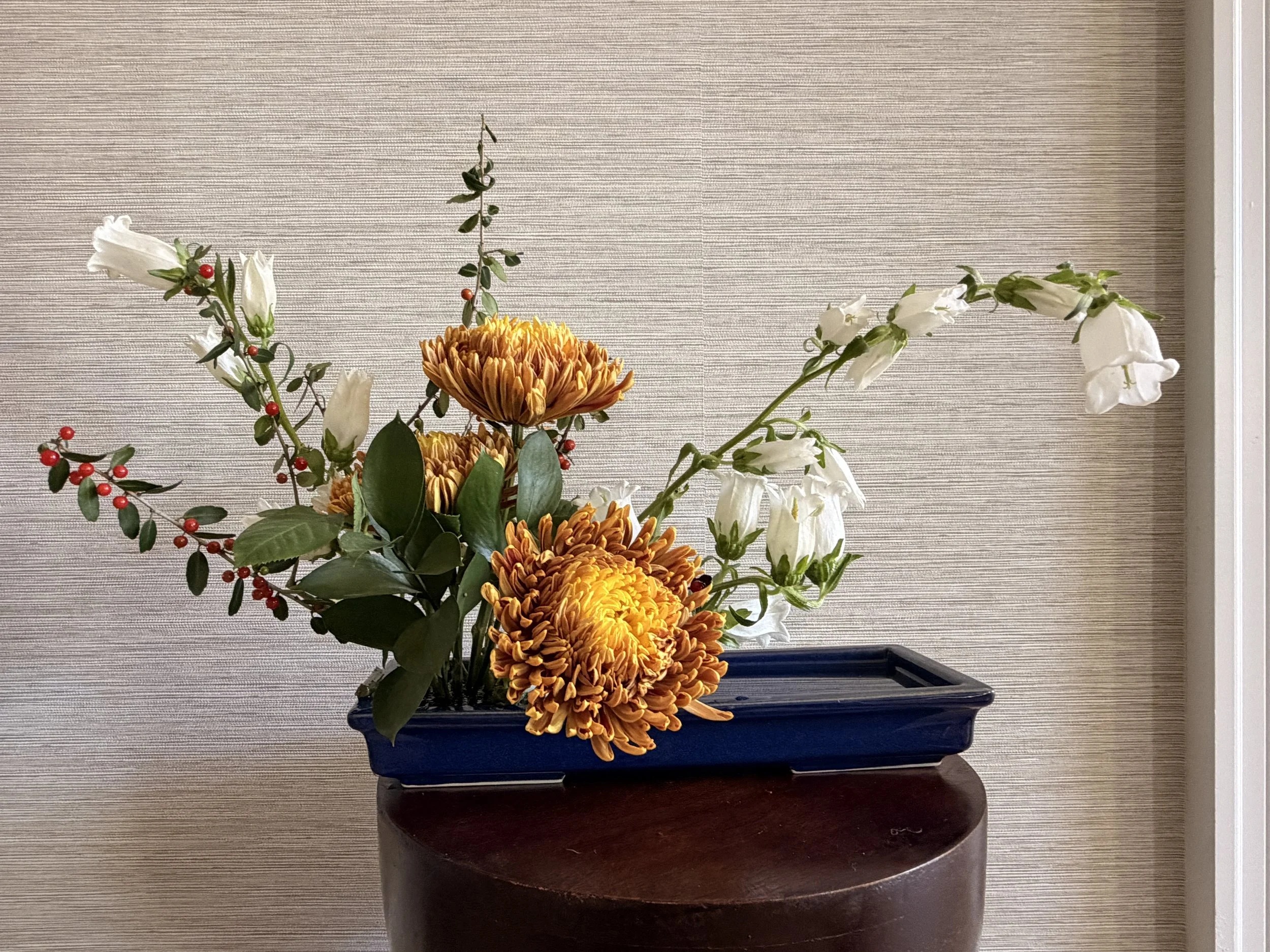
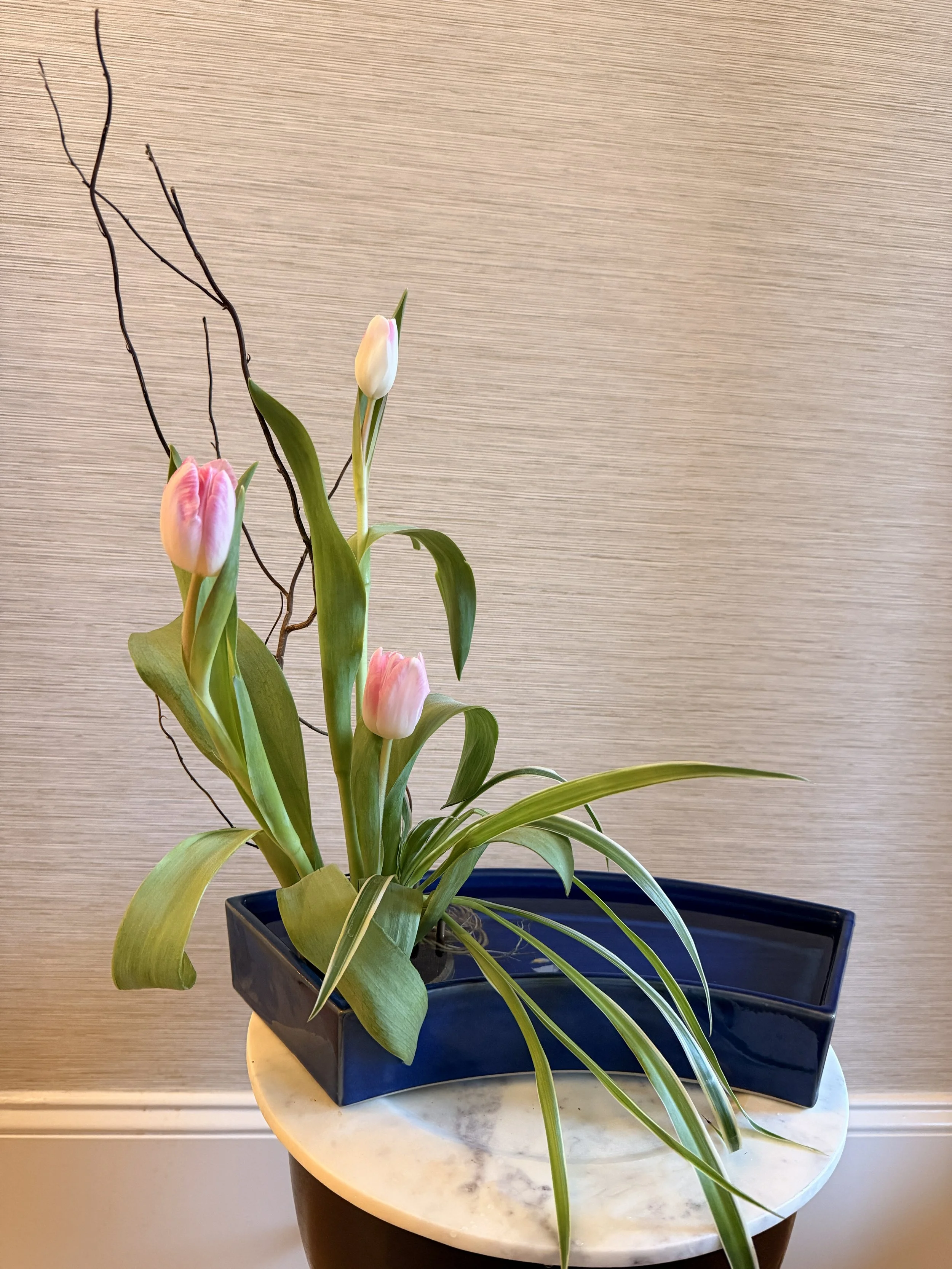
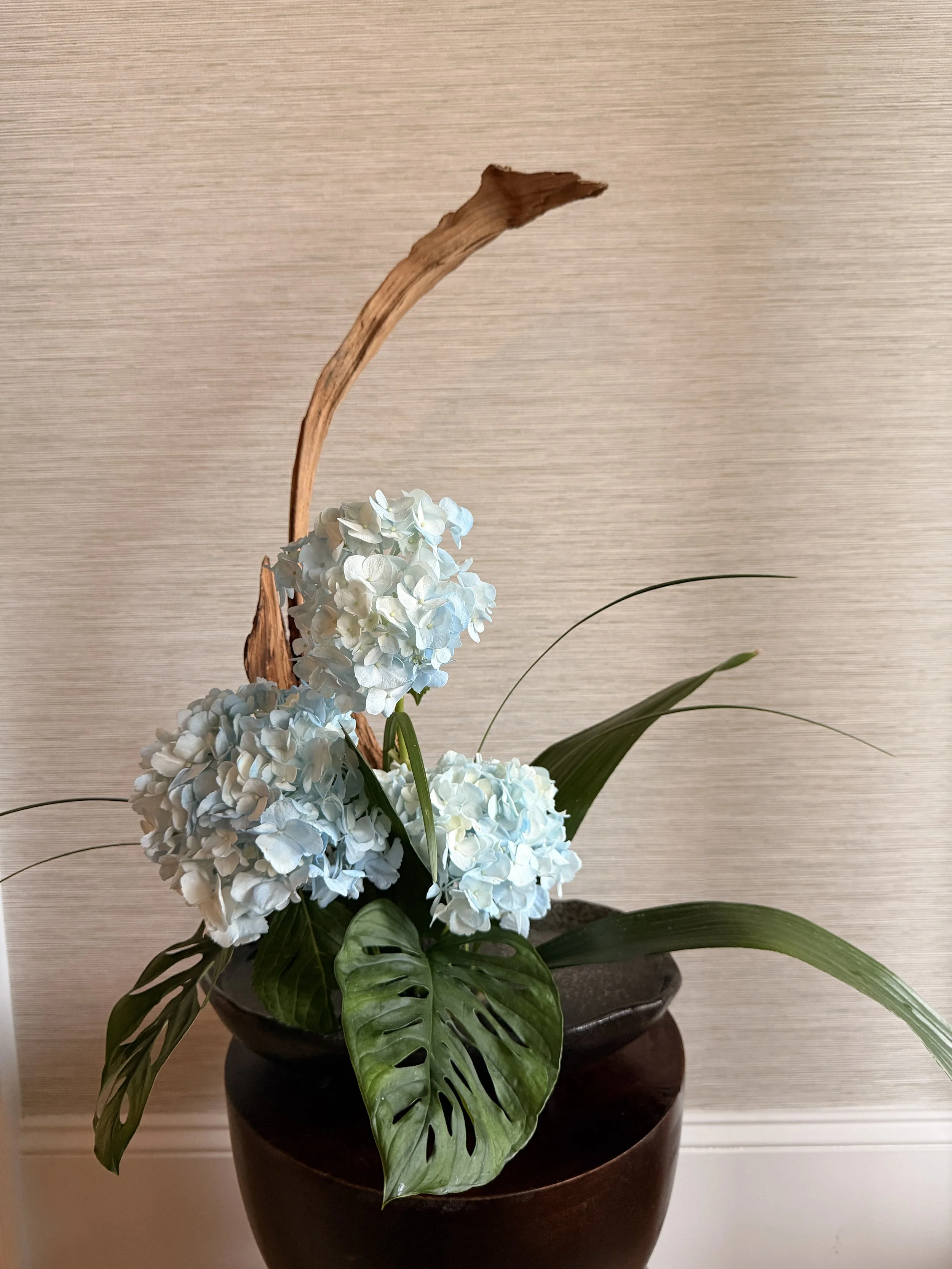
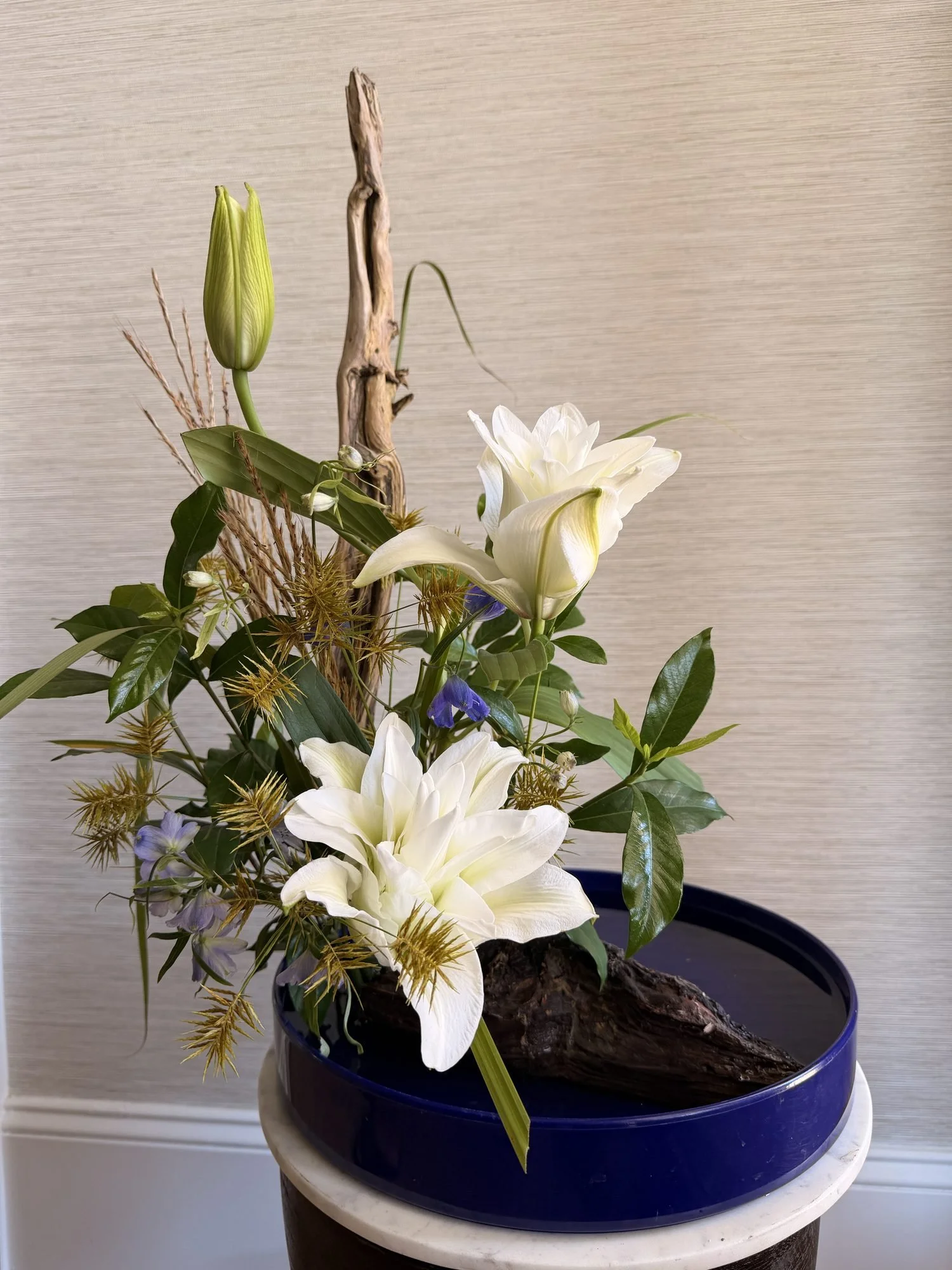
A few months ago, I started ikebana lessons, and I have completely fallen in love.
I found the class online. Not through a friend, and not through a studio I already knew. I took a chance, drove up to an orchid farm, in a secluded wooded area, with no cards in site, to meet a teacher I had never met. Somewhere on that drive I wondered what exactly I had signed up for. It turned out to be one of the best chances I have taken in a long time.
Ikebana, the Japanese art of flower arranging, has been practiced for centuries. It actually started out in China. The Japanese evolved it. Although there a few different schools of thought, they all share one idea: an arrangement is not about abundance. It is about intention, and about the space around the stems as much as the stems themselves.
Before I learned a single rule, I had to learn a different way of looking. A few ideas from those first lessons have stayed with me.
Less.
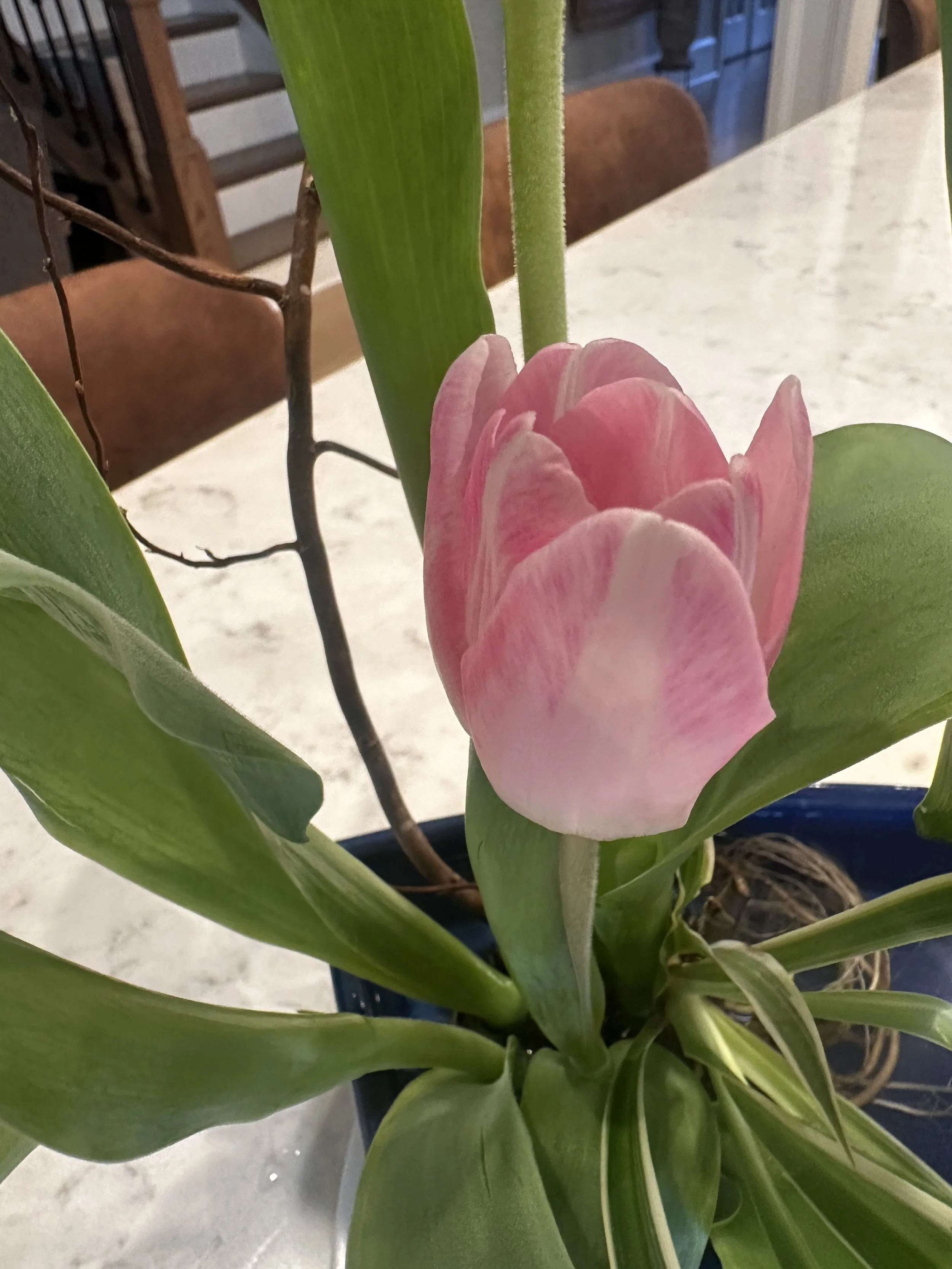
Less in more
When working with few flowers, try to have the stems look like they are coming from the same place.
Less is more. If you know me at all, you know this one turns my gut on its head. Adding one more stem is not where I naturally land, and ikebana asks me to stop sooner than feels comfortable. Every piece has to earn its place, and what I leave out matters as much as what goes in
Let nature lead.
Let the materials look like themselves. Driftwood, cattails, flowers, berries, branches. The focus is on the material exactly as it is. If a leaf has turned an odd color, or a berry looks a little off, I do not change it. It stays as it is, because that is what it looks like right now.
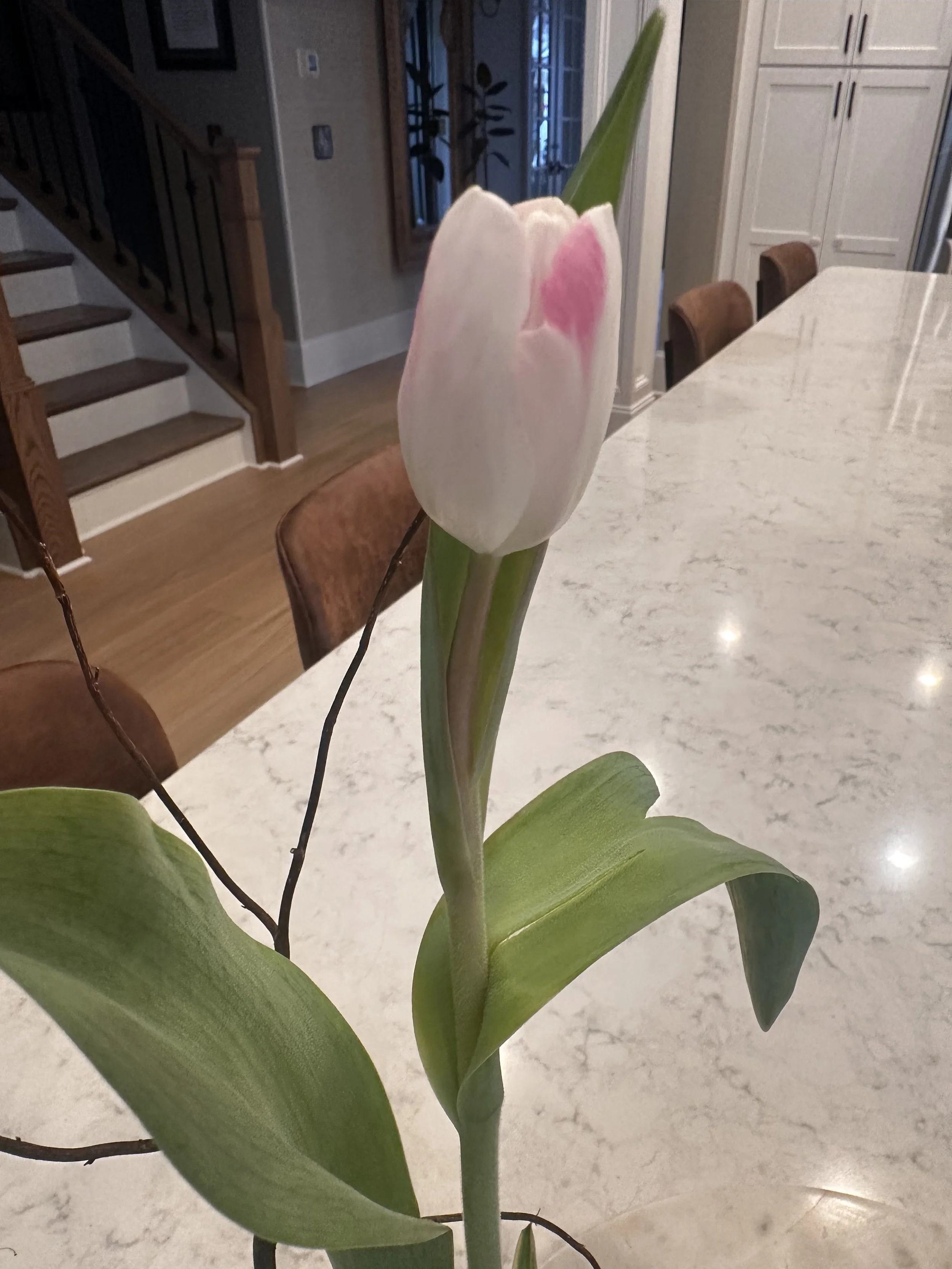
Add different types of materials, like flowers, leaves and branches.
BUT.. also let the florals speak on their own.
Let the materials look like themselves.
Find the natural curve and emphasize it. If needed, use your fingers to gently emphasis curves.
Natural materials + negative space = art
Create negative space, on purpose. In Japanese this open space is called ma, and in ikebana it is treated as part of the composition, not as leftover room. It is created intentionally, and it is minimal. Not more. The emptiness is what gives the stems their shape.
Put together, the lesson is this: find the beauty in what already exists in nature, right now, in this season. Not what I love the most, and not what has the best color. Just what is here.
Once that way of seeing starts to settle in, the practical rules make a lot more sense.
Stay tuned for more Ikebana tips as I start to dive all the way in.