
I love this time of year, when the fall colors start falling. I love when the leaves come down, and I love stepping in them. Croton gives me that same fall feeling, so I keep gravitating toward arrangements with it.
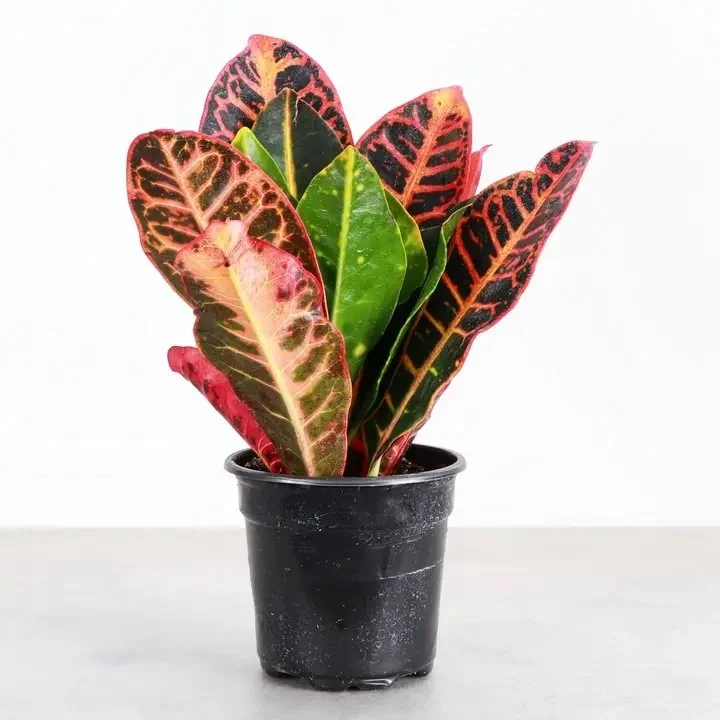
Petra Croton
Known for broad leaves veined in gold, orange, and pink-red.
A tropical plant for fall
Here is the irony: crotons are tropical. They come from the warm, humid islands of Southeast Asia and the western Pacific, and they would never choose a North Carolina November on their own. In South Florida you will see them grown outdoors as shrubs and hedges, glowing along driveways all year.
In most of the rest of the country, including here in the Triangle, crotons live indoors as houseplants, or outdoors in containers from spring through fall. They want to come inside before nights drop much below 50 degrees. So the plant that looks most like autumn is one that cannot actually stand the cold. I love it anyway.
Color that follows the light
My favorite croton tidbit: its color follows the light. The more bright light it gets, the deeper the reds and golds, and new leaves often come in green and color up as they age. A fall tree in slow motion, all year long.
That also means a croton in a dim corner will slowly fade toward green. Give it light, and it gives you color back.
A few of my favorites
There are hundreds of named crotons. Here are just some:
Petra: broad leaves veined in gold, orange, and pink-red
Mammy: wavy, twisting leaves in green, gold, and burgundy
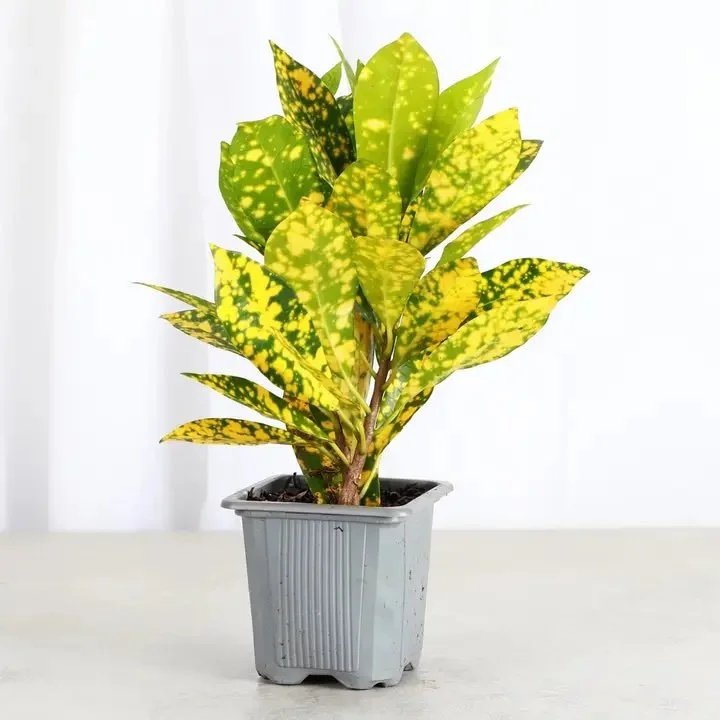
Gold Dust: green leaves speckled all over with gold
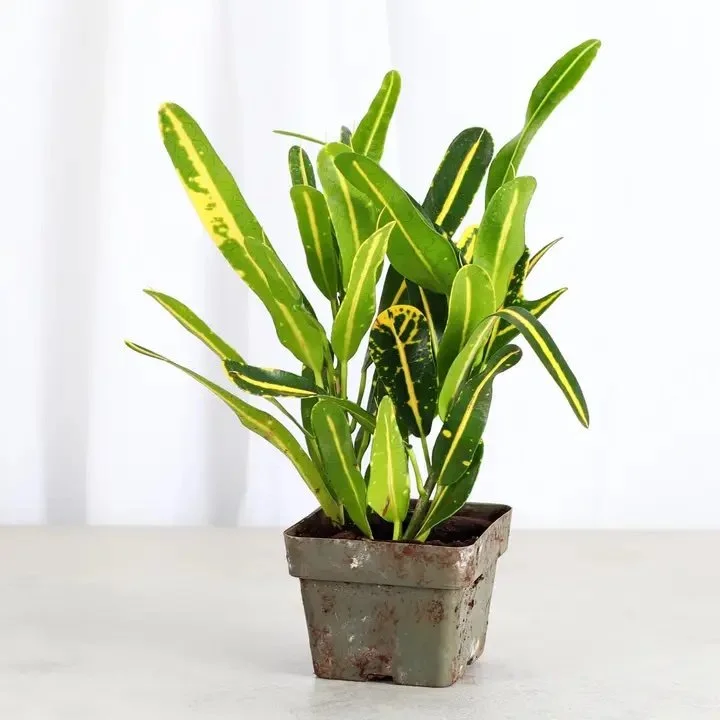
Banana: long, slender leaves with a bright yellow stripe
Picasso: thin, grassy leaves in burgundy, green, and gold, like brushstrokes
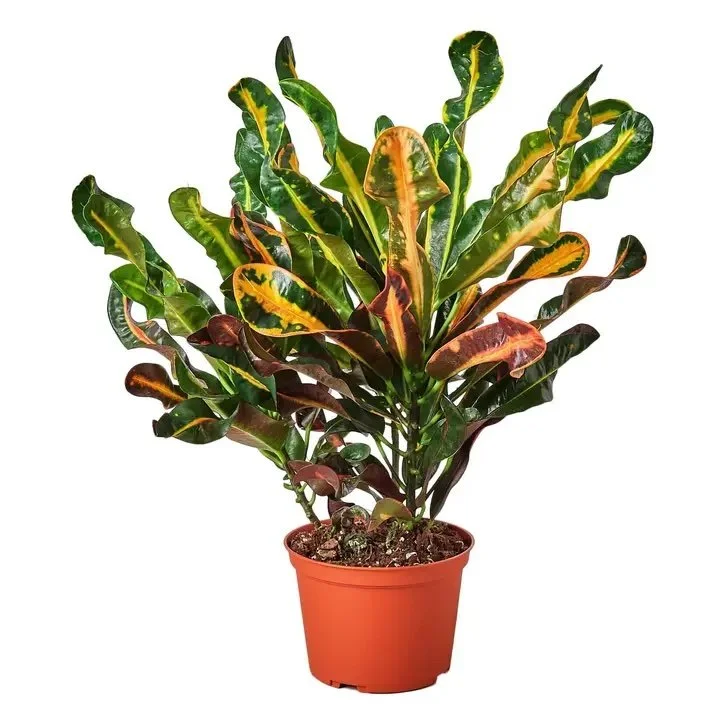
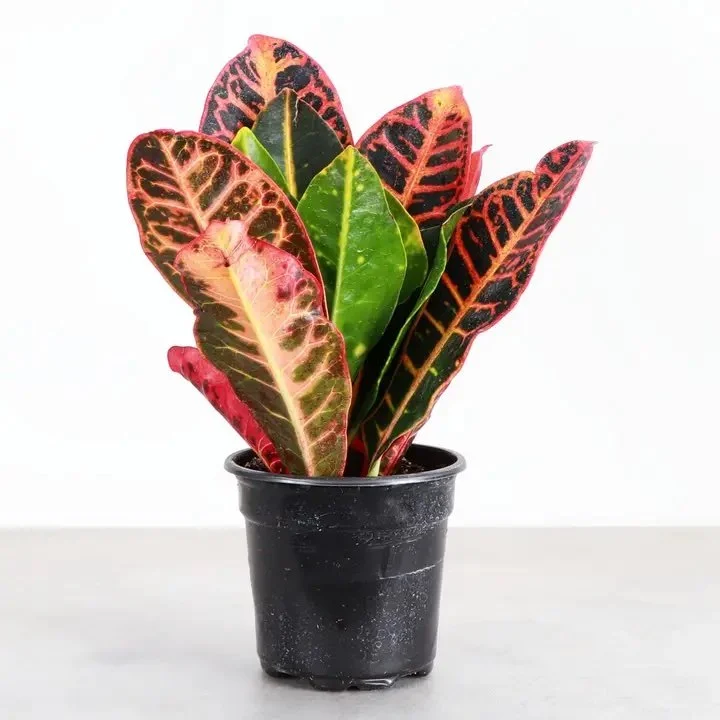
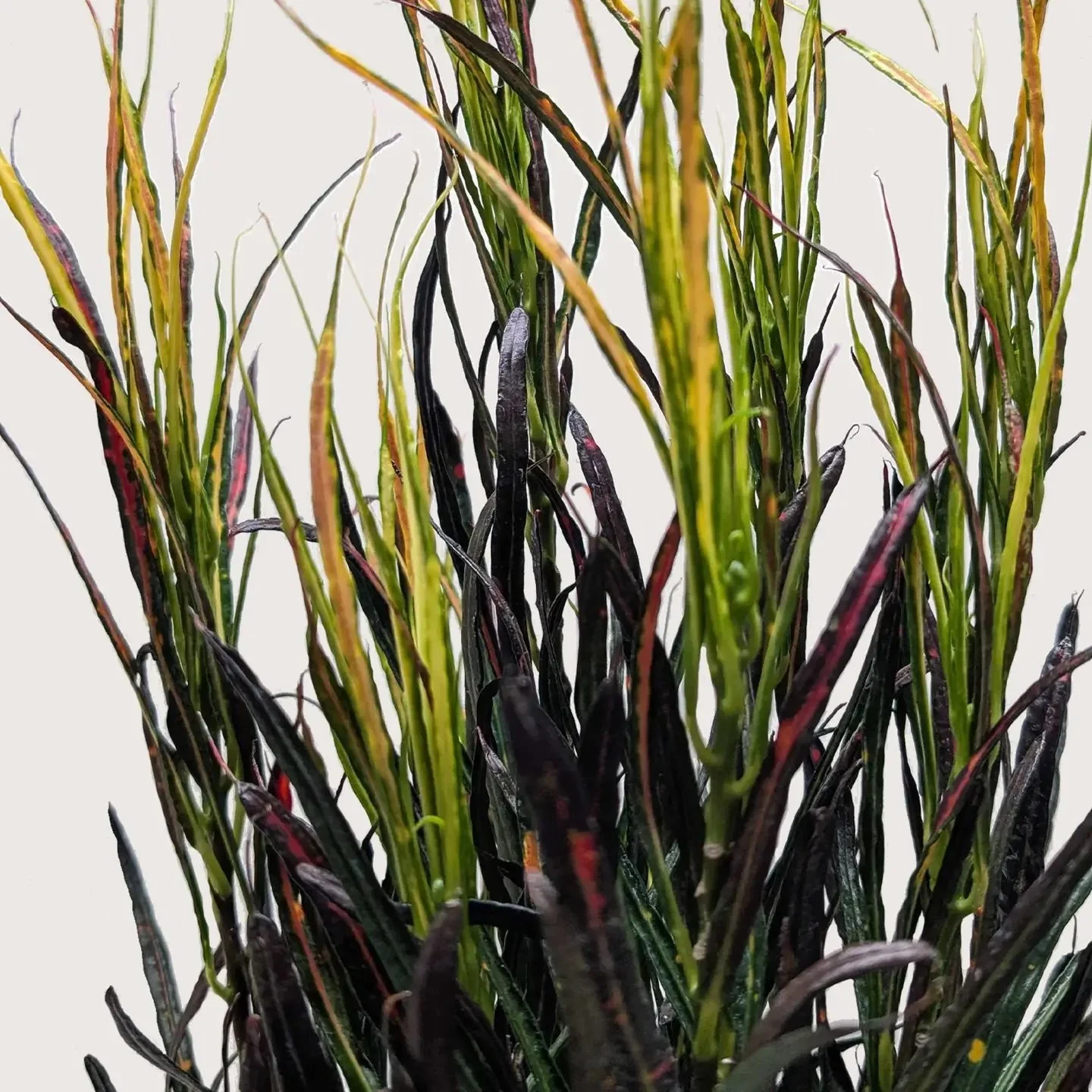
In the Studio right now…
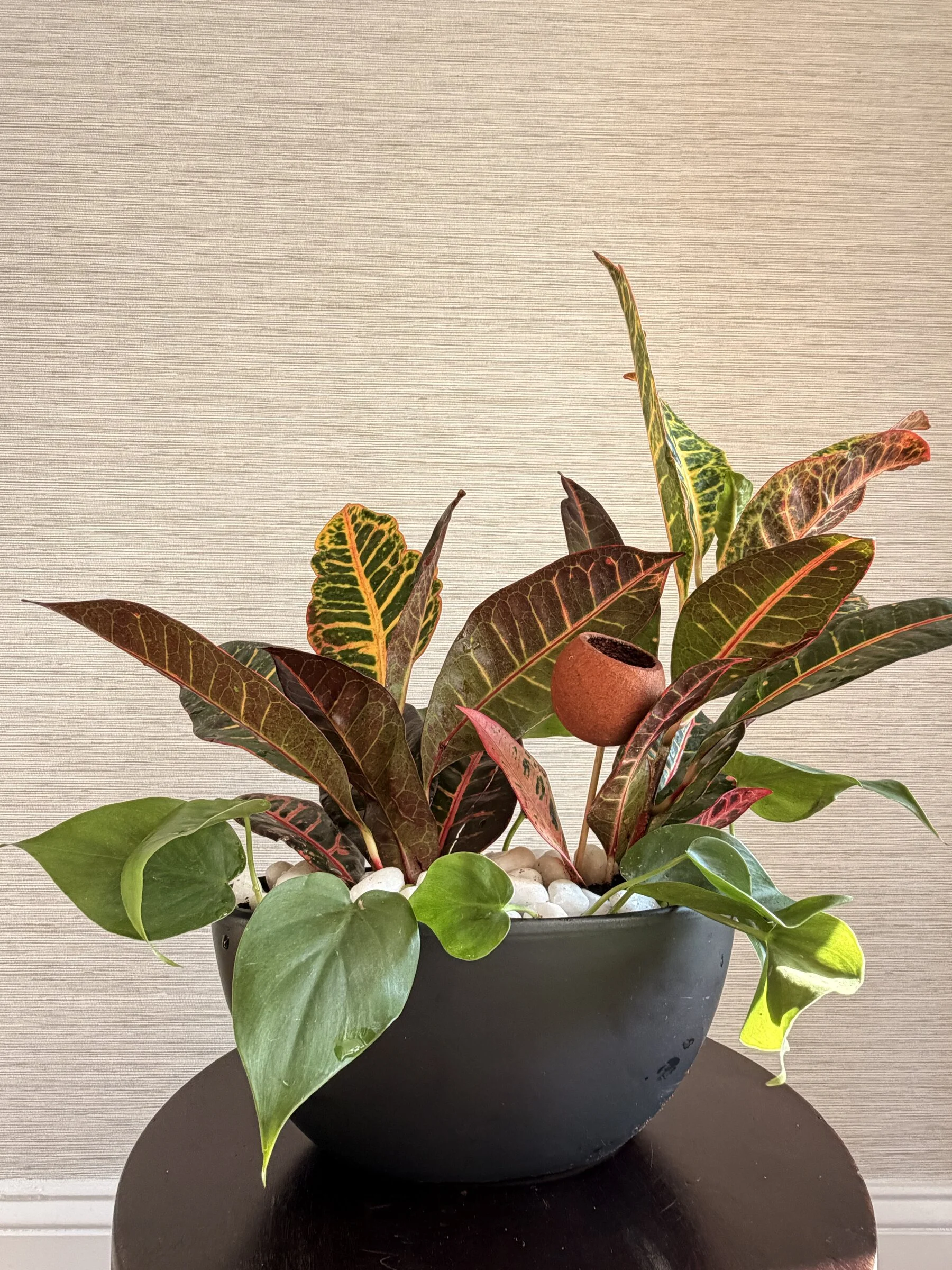
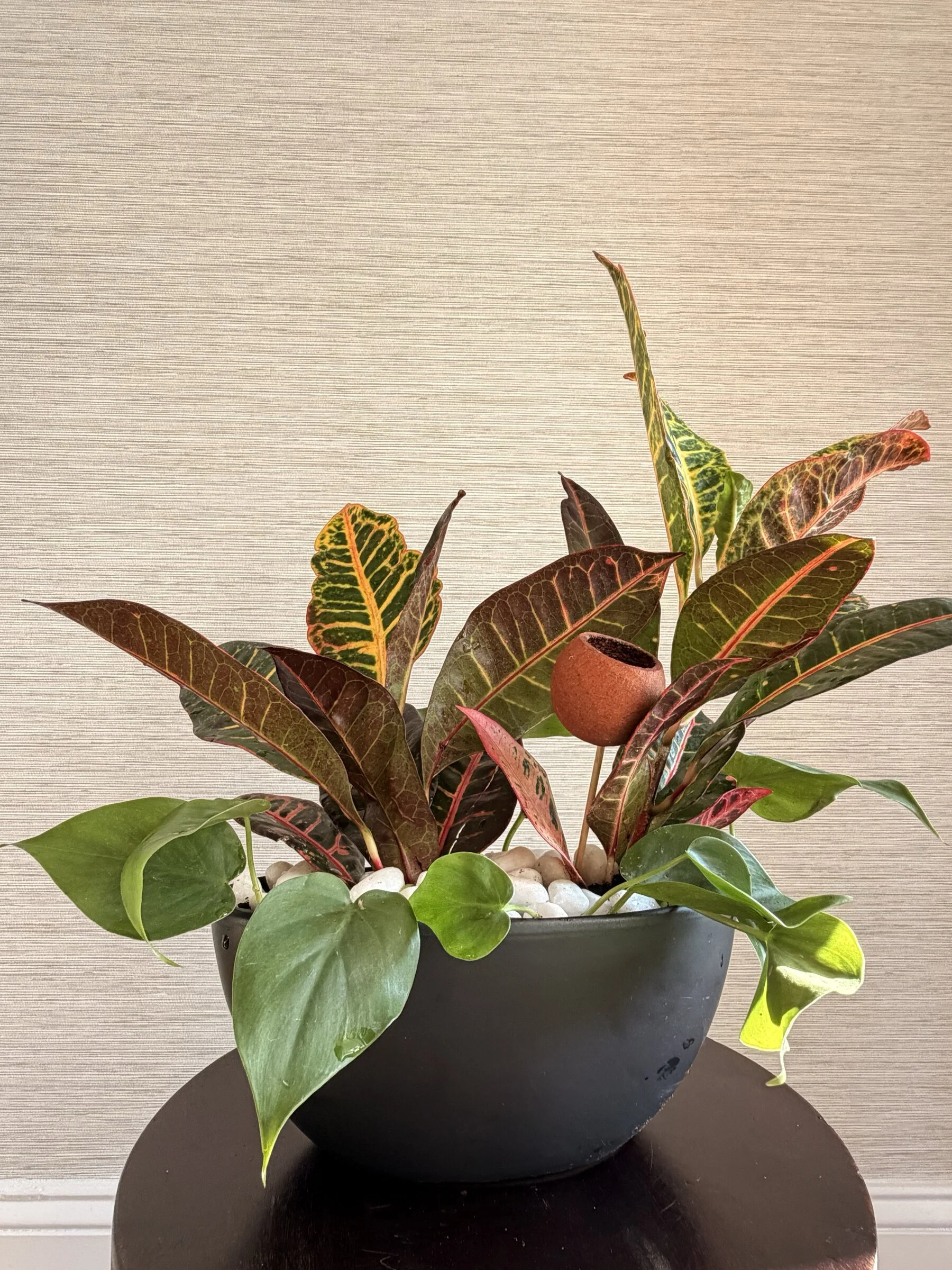
Fall Ember is a planted arrangement of croton and sweetheart philodendron in a black Meta Boat ceramic pot, designed by hand in Apex, NC.
Croton leaves stand upright in deep burgundy, rust, and gold, the colors of the season, each leaf veined and speckled a little differently. Sweetheart philodendron trails over the rim in soft green hearts to balance the height. A dried botanical pod and a layer of white river stones finish the design. Unlike cut stems, it keeps going long after the leaves outside have dropped.
Includes the Meta Boat ceramic pot, both plants, the dried pod, and the stone top dressing. The pot measures 8.75 x 3.75 x 4 inches.
Available for pickup at the studio in Apex, or local delivery across the Triangle for a 15 dollar fee.
Care: The pot has no drainage hole, so water lightly and only when the top inch of soil feels dry. Pour slowly around the base of the plants rather than over the stones, and stop before water pools. Place in bright, indirect light. Croton needs the most light of the two, and its color fades in dim rooms. Keep it away from cold drafts, heating vents, and temperatures below 60 degrees. A croton may drop a few leaves after it moves to a new home; this is normal and it settles in within a few weeks. Sweetheart philodendron is easygoing and will trail longer over time. Trim the vines back if you want a fuller shape. Wipe dust from the leaves now and then so they stay glossy.
Does the pot have a drainage hole? No. Water sparingly so excess water does not collect at the bottom.
How much light does it need? Bright, indirect light. Croton keeps its strongest color near a window without harsh afternoon sun.
Is it safe for pets? Both croton and philodendron are toxic to cats and dogs if chewed, so place it out of reach.
Can I pick this up? Yes. Pickup is available at the studio in Apex, or choose delivery across the Triangle for $15.

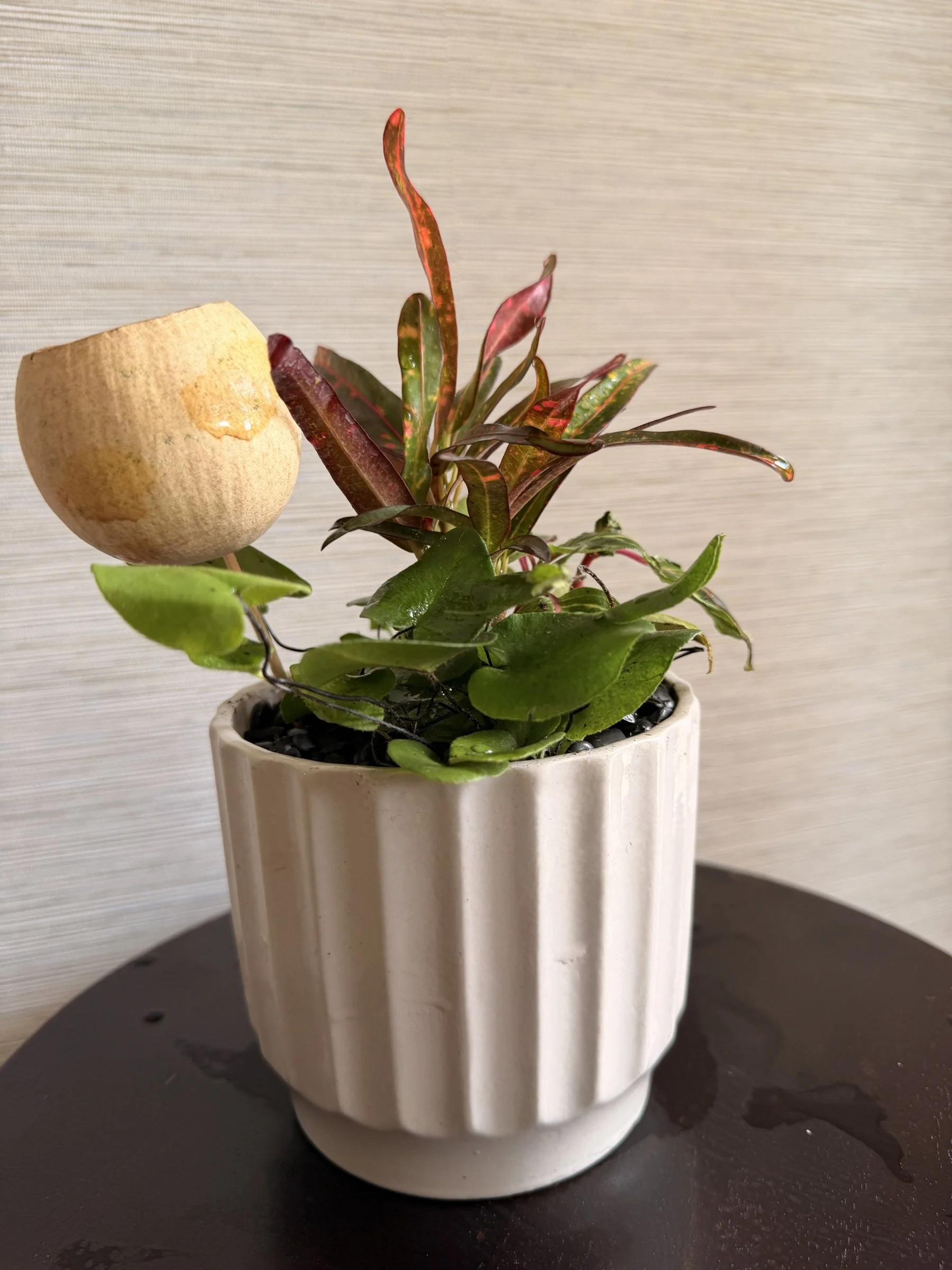
This centerpiece pairs the bold, streaked color of croton with the trailing, glossy heart leaves planted together in a cream ribbed pot with a clean, vertical texture and a black pebble top dressing. A dried lotus pod, with its distinct honeycomb cross section, rests on a pick among the greenery, a quiet, sculptural note against the warm foliage color. It's a small piece with a lot going on: color, texture, and a bit of movement from the trailing hoya.
Each one is hand planted to order here in Apex, so the exact mix of leaf color, hoya trail, and pod placement will vary slightly from the photos. That's part of what makes it feel gathered rather than manufactured.
Details
Live croton and hoya, hand selected and arranged
Cream ribbed ceramic pot
Black pebble top dressing
One dried lotus pod accent on a pick
Arrives ready to display, no additional planting required
Every piece is one of a kind; slight variation in leaf color, hoya trail, and pod placement should be expected
Delivery Local delivery is $15 flat rate throughout Apex, Cary, Raleigh, Durham, Holly Springs, and Fuquay-Varina.
Care Instructions
Light: Bright, indirect light. Croton needs strong light to hold its color blooms best with plenty of bright light as well, so a spot near a sunny window suits this piece well.
Water: Water when the top inch or two of soil feels dry, typically every 7 to 10 days. Hoya stores water in its leaves and would rather dry out between waterings than sit in soggy soil, so it's fine to lean toward underwatering.
Humidity: Average household humidity works for both plants. A light mist now and then doesn't hurt, but isn't required.
Drainage: This pot does not have drainage. Water ½ cup of water when soil is dry.
The dried pod: Purely decorative and shelf stable. No care needed, and it can be removed if you'd rather keep the arrangement all live.

Where botanicals become art.
This centerpiece pairs the bold, streaked color of croton with soft, ferny greenery, all planted together in a white ribbed pot with a clean, vertical texture. A dried lotus pod, with its distinct honeycomb cross-section, is tucked in on a pick for contrast, a quiet nod to something gathered rather than grown. The combination of warm foliage color, soft texture, and one dried element gives the piece movement and depth without feeling busy.
Each one is hand-planted to order here in Apex, so the exact mix of leaf color and placement will vary slightly from the photos. That's part of what makes it feel gathered rather than manufactured.
Details
Live croton and fern, hand-selected and arranged
White ribbed ceramic pot
One dried lotus pod accent on a pick
Arrives ready to display, no additional planting required
Every piece is one of a kind; slight variation in leaf color, fern fullness, and pod placement should be expected
Delivery Local delivery is $15 flat rate throughout Apex, Cary, Raleigh, Durham, Holly Springs, and Fuquay-Varina. Orders placed by [cutoff time] ship or deliver the same week.
Care Instructions
Light: Bright, indirect light. Croton needs strong light to hold its color; too little light will cause new growth to come in more green and less vivid.
Water: Water when the top inch of soil feels dry, typically every 5 to 7 days. Ferns prefer consistent moisture more than croton does, so check the soil before watering rather than working on a fixed schedule.
Humidity: Ferns in particular appreciate higher humidity. A light mist a few times a week helps keep the fronds from crisping at the edges.
Drainage: If this pot doesn't have a drainage hole, water lightly and check for pooling at the base after watering. Confirm drainage before publishing this detail live.
The dried pod: Purely decorative and shelf-stable. No care needed, and it can be removed if you'd rather keep the arrangement all-live.
How to care for a croton
Light: Bright, indirect light gives the best color. Too little and the leaves fade to green. Too much harsh direct sun and they turn dull and grayish.
Water: Water when the top half inch to inch of soil is dry, and a little less in winter. Croton doesn't like extremes, so don't let it stay soggy or bone dry for long.
Humidity: Moderate to high. A pebble tray or a grouping of plants helps in dry winter air.
Temperature: Happiest between 60 and 85 degrees. Below 50, expect leaf drop. Keep it away from cold drafts, heating vents, and sudden temperature swings.
Soil: Rich, well-drained potting mix.
Feeding: Once or twice during the growing season is plenty.
Repotting: When it is rootbound, move up to a pot only 1 to 2 inches larger.
Pruning: If it gets leggy, prune it back hard in early spring, before new growth starts, and it will branch out fuller.
Moving it outside: Crotons can summer outdoors in containers. Move them out once days and nights stay above 50 degrees, ease them into the brighter light over a week or two, and bring them back in before fall nights drop below 50.
Leaf drop: The most common croton complaint. It almost always comes from cold, drafts, a sudden change in spot or temperature, or watering that is too wet or too dry. Fix the cause, and new leaves will follow.
Pests: Watch for the usual houseplant pests: mealybugs, spider mites, and scale.
Sap and pets: The milky sap from a cut stem can irritate sensitive skin, so wear gloves when pruning. The plant is also toxic to cats and dogs if chewed, so keep it out of reach.
Bring the outside colors in
When the trees outside are bare, a croton is still holding onto October. Each one is planted by hand in Apex, NC, with $15 flat-rate local delivery across the Triangle, or pickup at the studio in Apex.
when botanicals become art